Free tool · Australian units
Power Station Runtime & Sizing
Add the fridge, the CPAP and the blanket. See hours of runtime for each of our picks, the watt-hours you need, and solar recharge time for your state.
Data checked 8 September 2026 · No sign-up · Feeds power stations, tyre inflators
Step 1
What do you want to run?
12 V compressor fridge, 35 to 45 L
about 14 W average, 98 W peak · Dometic CFX3 45: 12.4 W average at 32 °C ambient (about 300 Wh a day); Engel MT45 draws 0.5 to 3 A.
Per day336 WhPhone, full charge
18 Wh per charge · A 14 Wh phone battery plus charging losses.
Per day36 WhLED camp light kit (2 to 4 bars)
about 15 W average, 29 W peak · A Hard Korr four-bar kit is 29 W flat out; dimmed average is an estimate.
Per day75 Wh
Step 2
For how long, and how hot?
Your numbers
What you need
Per day
471Wh
447 Wh at the appliances
2-day trip
941Wh
out of the battery
Buy at least
1,129Wh
with a 20% margin
Inverter needs
0W
all loads on 12 V
Our picks
Which power station fits?
- Smallest that fits

#1 Anker SOLIX C1000
1,056 Wh · 1,800 W (2,400 W surge) · A$1,099
2.0 days of your daily load
950 Wh usable at 90%

#5 DJI Power 2000
2,048 Wh · 3,000 W · A$2,401.52
3.9 days of your daily load
1,843 Wh usable at 90%

#6 BLUETTI Elite 30 V2
288 Wh · 600 W (1,500 W surge) · A$399
13 h of your daily load
259 Wh usable at 90%

#7 Anker SOLIX C300
288 Wh · 300 W (600 W surge) · A$549
13 h of your daily load
259 Wh usable at 90%

#4 EcoFlow RIVER 3 Max
572 Wh · 600 W (1,200 W surge) · A$649
26 h of your daily load
515 Wh usable at 90%

#2 EcoFlow DELTA 3 Plus
1,024 Wh · 1,800 W (3,600 W surge) · A$1,199
47 h of your daily load
922 Wh usable at 90%
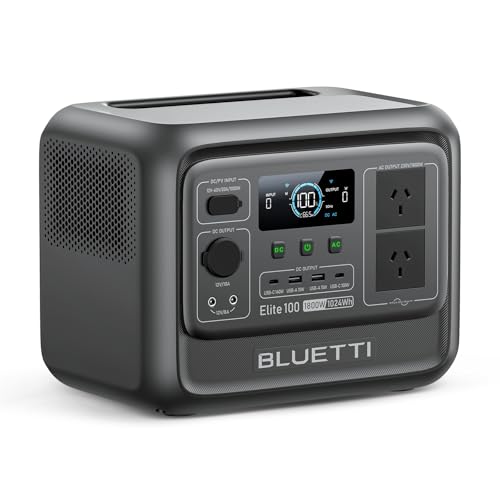
#3 BLUETTI Elite 100 V2
1,024 Wh · 1,800 W (2,700 W surge) · A$899
47 h of your daily load
922 Wh usable at 90%
Picks from our portable power station ranking, in order of fit. As an Amazon Associate we earn from qualifying purchases.
Step 3
Recharging from solar
Peak sun
4.5h/day
Sydney, year average
Real panel output
150W
75% of the sticker rating
To replace a day's use
3.1 h
about 0.7 sunny days
Cloud, a flat panel and heat all cut output further; a panel tilted at the sun and moved twice a day gets closer to its rating.
Corded tools
Will a 10 A outlet and this lead cope?
Current
8.7A
at 230 V
Outlet
10 A
standard GPO is fine
Volt drop
1.8%
lead is fine
A standard Australian outlet delivers 2,400 W (10 A); a 15 A outlet delivers 3,600 W and has a wider earth pin, so a 15 A plug does not fit a 10 A socket by design. Keep volt drop under 5% on motor tools. Physics only; wiring rules are AS/NZS 3000 and a licensed electrician's call.
Library
Appliance figures used above
| Appliance | Average | Peak | 12 V? | Typical day |
|---|---|---|---|---|
| 12 V compressor fridge, 35 to 45 LDometic CFX3 45: 12.4 W average at 32 °C ambient (about 300 Wh a day); Engel MT45 draws 0.5 to 3 A. | 14 W | 98 W | Yes | 24 h |
| 12 V compressor fridge, 50 to 65 LDometic CFX3 55: 13.3 W at 32 °C; Bushman 52 L: 8 W at 25 °C; Kings 60 L: about 10 W claimed. | 15 W | 107 W | Yes | 24 h |
| 12 V dual-zone fridge/freezer, 75 to 95 L, freezer runningDometic CFX3 75DZ: 36.5 W and 95DZ: 43 W at 32 °C with the freezer at −15 °C; fridge-only mode roughly halves it. | 40 W | 125 W | Yes | 24 h |
| 3-way caravan fridge on 12 VAbsorption fridges draw constantly on 12 V (estimate); run them on gas when parked. | 120 W | 150 W | Yes | 24 h |
| Bar fridge, 120 to 165 L (230 V)0.8 to 1.5 kWh a day on Australian energy labels; compressor start-up surge is short but real. | 45 W | 1000 W | No | 24 h |
| Full-size fridge/freezer, 400 to 500 L (230 V)A modern unit uses about 1 kWh a day (350 kWh a year); older ones double that. 80 to 280 W while running, 600 to 1,800 W to start. | 45 W | 1500 W | No | 24 h |
| CPAP without humidifier (ResMed AirSense 10, DC converter)ResMed's battery guide: 0.7 to 1.7 A at 12 V depending on pressure. Use the maker's DC converter, not the inverter. | 11 W | 25 W | Yes | 8 h |
| CPAP with humidifier (AirSense 10, HumidAir setting 4)1.7 to 4.2 A at 12 V; the humidifier is most of the draw. | 28 W | 60 W | Yes | 8 h |
| CPAP with humidifier on 8 and heated tube (AirSense 10)4.7 to 5.6 A at 12 V with ClimateLineAir at 30 °C. Turn the humidifier down to stretch a night. | 59 W | 104 W | Yes | 8 h |
| CPAP, ResMed AirSense 11 with humidifier and heated tubeResMed's typical 56 W figure; without the humidifier expect 10 to 20 W. | 56 W | 73 W | Yes | 8 h |
| ResMed AirMini travel CPAP0.4 to 0.8 A at 12 V through the AirMini DC converter. | 6 W | 27 W | Yes | 8 h |
| Oxygen concentrator, home 5 L (Philips EverFlo)Size from the manufacturer's figure for your flow setting and keep a margin. | 350 W | 400 W | No | 8 h |
| Portable oxygen concentrator (Inogen One G5 class)120 W maximum DC input; draw depends on the flow setting (estimate). | 40 W | 120 W | Yes | 8 h |
| Electric blanket, singleSunbeam Sleep Perfect is rated 150 W in every size; the thermostat cycles, so the average is far lower (estimate). | 50 W | 150 W | No | 8 h |
| Electric blanket, doubleRated 150 W; average with cycling is an estimate. | 60 W | 150 W | No | 8 h |
| Electric blanket, queenRated 150 W; on high all night is closer to the rating. | 75 W | 150 W | No | 8 h |
| 12 V diesel heater, 2 kW classWebasto Air Top 2000: 14 to 29 W running; the glow plug pulls about 100 to 130 W for a few minutes at start-up (estimate). | 25 W | 120 W | Yes | 8 h |
| Starlink MiniStarlink's own figure is 25 to 40 W average; Australian owners log 16 to 20 W steady after the 2026 firmware. Runs from 12 V with a USB-C PD lead. | 30 W | 60 W | Yes | 8 h |
| Starlink Standard (Gen 3)Starlink's figure is 75 to 100 W average; AC power supply only. | 85 W | 100 W | No | 8 h |
| LaptopA MacBook Air draws 20 to 40 W working; a gaming laptop can pull 90 W or more. | 40 W | 90 W | Yes | 4 h |
| TV, 32 inch LED | 41 W | 60 W | Yes | 3 h |
| TV, 50 to 55 inchA 7-star 55 inch averages about 58 W, a 3-star one 142 W. | 80 W | 142 W | No | 3 h |
| Games console (PS5 class)200 to 300 W gaming, 40 to 50 W idle. | 220 W | 350 W | No | 2 h |
| Wi-Fi router or 4G modem | 8 W | 20 W | Yes | 24 h |
| USB or 12 V fanUSB fans draw 2 to 5 W; a 12 V oscillating fan 15 to 25 W. | 8 W | 25 W | Yes | 8 h |
| LED camp light kit (2 to 4 bars)A Hard Korr four-bar kit is 29 W flat out; dimmed average is an estimate. | 15 W | 29 W | Yes | 5 h |
| 12 V water pump (Shurflo 4009)Runs only while a tap is open; a quarter of an hour a day is generous. | 50 W | 62 W | Yes | 0.25 h |
| Phone, full chargeA 14 Wh phone battery plus charging losses. | 18 Wh/charge | 25 W | Yes | 2 charges |
| Tablet, full chargeiPad class, 28.6 Wh battery plus losses. | 34 Wh/charge | 30 W | Yes | 1 charges |
| Drone battery, DJI Mini class (19 Wh) | 23 Wh/batterie | 40 W | Yes | 2 batteries |
| Drone battery, DJI Air 3 class (63 Wh) | 75 Wh/batterie | 80 W | Yes | 2 batteries |
| Camera battery (Sony NP-FZ100, Canon LP-E6NH) | 20 Wh/batterie | 20 W | Yes | 2 batteries |
| 18 V 5 Ah power tool battery90 Wh in the pack plus charger losses. | 108 Wh/charge | 180 W | No | 1 charges |
| E-bike battery (500 Wh)Bosch PowerTube 500; a 750 Wh pack needs about 870 Wh. | 580 Wh/charge | 180 W | No | 1 charges |
| Kettle, 2,200 W (1.7 L boil)EcoFlow AU measures 180 to 220 Wh per full boil (158 Wh is the physics minimum). Needs an 1,800 W or larger inverter; boil less water. | 200 Wh/boil | 2200 W | No | 3 boils |
| Travel kettle, 1,000 W (0.5 L)Estimate from the energy to boil half a litre. | 60 Wh/boil | 1000 W | No | 3 boils |
| Pod coffee machine (1,260 W)Warm-up plus extraction; estimate. | 25 Wh/cup | 1310 W | No | 2 cups |
| Portable induction cooktopAdjustable 200 to 2,000 W; the average on a cooking setting is an estimate. | 1200 W | 2100 W | No | 0.5 h |
| Microwave (700 W output, about 1,100 W input)Input is about 1.5 times the cooking power on the label. | 92 Wh/5-minute run | 1150 W | No | 2 5-minute runs |
| Air fryer, 1,400 to 1,500 WThe element cycles once hot; about two-thirds duty. | 1000 W | 1500 W | No | 0.33 h |
| Toaster, 2-slice (900 W)A 4-slice at 1,600 to 2,000 W uses about the same per slice. | 40 Wh/round | 900 W | No | 2 rounds |
| Rice cooker, 5 cup (500 W)About 330 Wh per 40-minute cook. | 400 W | 700 W | No | 0.75 h |
| Slow cooker (low)Makers do not publish wattage; estimate. | 150 W | 300 W | No | 6 h |
| Hair dryer, 2,000 WAustralian models are typically 2,000 to 2,400 W. | 170 Wh/5-minute use | 2200 W | No | 1 5-minute uses |
| Caravan air conditioner, inverter type (Dometic Ibis 4, Harrier)Ibis 4 is rated 1,656 W cooling and soft-starts from under 300 W; owners log about 1,000 W steady in mild weather. | 1300 W | 1700 W | No | 3 h |
| Caravan air conditioner, non-inverter (Truma Aventa Comfort)About 1,000 W running, but 28 A for 150 ms at start-up (6.5 kVA). Only a soft-start kit or a very large inverter copes. | 1000 W | 6500 W | No | 3 h |
How it works
Method and assumptions
Every appliance is energy over time: watts multiplied by hours. A 12 V fridge does not draw its rated 100 W all day; the compressor cycles, so Dometic's own figure for a 45 L unit at 32 °C is about 12 W on average, or 300 Wh a day. The library uses manufacturer averages where they exist, marks the estimates, and lets you change the hours.
Power stations lose energy turning battery into 230 V AC, about 15%, and the battery management keeps a reserve, so about 90% of the rated capacity is usable. The calculator divides AC loads by the inverter efficiency and DC loads (12 V socket or USB) by a much smaller loss, then compares the result with each pick's usable capacity and inverter rating.
Solar recharge uses the Bureau of Meteorology's mean daily solar exposure for your capital city, converted to peak sun hours on a flat panel, and derates a portable panel to 75% of its sticker rating, which is what EcoFlow itself suggests planning on. Cloud, a flat panel and heat push it lower; a panel tilted at the sun does better, especially in winter.
Appliance figures are manufacturer specifications or published measurements where available and clearly marked estimates elsewhere; your model may differ, so check its label. Runtimes are estimates, not a guarantee. For medical devices such as CPAP or oxygen concentrators, size with the manufacturer's own figures and keep a margin.
Power Station Calculator — Frequently Asked Questions
How long will a 1,000 Wh power station run a 12 V fridge?+
Dometic rates its 45 L CFX3 at 12.4 W average in 32 °C heat, about 300 Wh a day. From a 1,024 Wh station with 90% usable, run through the 12 V socket, that is close to three days. A 75 L dual-zone with the freezer running uses about 875 Wh a day and empties the same station in a day.
What size power station do I need for a CPAP?+
ResMed's battery guide puts an AirSense 10 without humidifier at 0.7 to 1.7 A at 12 V, so a night is about 90 Wh and a 288 Wh station covers two or three nights. With the heated humidifier and tube it rises to 4.7 to 5.6 A, close to 60 W or 480 Wh a night, so plan on 1,000 Wh for two nights and use the DC converter, not the inverter.
Can a portable power station run a caravan air conditioner?+
Inverter units such as the Dometic Ibis 4 or Harrier soft-start from under 300 W and run at 1,000 to 1,650 W, so any station with an 1,800 W inverter runs them, for well under an hour per kilowatt-hour. A non-inverter unit such as the Truma Aventa Comfort draws 28 A for 150 ms at start-up, which trips every portable station unless a soft-start kit is fitted.
How long does it take to recharge from a solar panel?+
Divide the energy you used by the panel's real output. A 200 W portable panel makes about 150 W in full sun, so 700 Wh of use needs about five peak sun hours: a full clear winter day in Hobart, or a morning in Darwin. The calculator uses the Bureau of Meteorology's figures for your capital city.
Can I take a power station on a plane?+
Almost never. Airlines allow lithium batteries up to 100 Wh without approval and up to 160 Wh with approval, in carry-on only. Every power station on this site is 288 Wh or more, so they travel by road. The same applies to spare 12 V lithium batteries.
What is the difference between Wh and Ah?+
Amp-hours only mean something with a voltage attached. A 100 Ah 12 V battery holds 1,200 Wh; a 100 Ah 24 V battery holds twice that. Power stations quote Wh so you can compare them directly; to convert a 12 V fridge's amp draw, multiply by 12.
Useful? Send it to the mate who keeps asking.
Related reading
More free tools
Sources
- Dometic: CFX3 45, 55IM and 75DZ power consumption at 32 °C
- ResMed: battery guide (DC current draw by pressure and humidifier setting)
- Starlink: Mini and Standard specification sheets
- Bureau of Meteorology: monthly mean daily global solar exposure by station
- EcoFlow: why a panel makes about 75% of its rating
- BLUETTI Australia: runtime formula (battery and inverter efficiency)
- EcoFlow Australia: kettle energy per boil
- Dometic Ibis 4 and Truma Aventa Comfort manuals (air conditioner current)
- Anker, EcoFlow, BLUETTI and DJI specification pages for the seven picks
- CASA: lithium batteries on aircraft