12 August 2026 · Cordless Drills · AI-assisted · published by Jaco Olwagen · How we rank
DeWalt 18V XR vs Makita 18V LXT Australia 2026: Which Platform Should Tradies Buy?
DeWalt 18V XR vs Makita 18V LXT in Australia 2026: drills, drivers, saws and grinders compared, with Amazon AU prices and parallel-import warranty advice.
Ask a chippie in a Bunnings car park whether DeWalt 18V XR or Makita 18V LXT is the better platform and you'll get an answer inside two seconds, delivered with the certainty of a bloke who has never owned the other one. That's the problem with the DeWalt 18V XR vs Makita 18V LXT question in Australia in 2026: almost everyone answering it is defending a decision they made years ago, usually because that's what came off the truck on their first day as an apprentice. The batteries are yellow or they're teal, and once you've got four of them on the charger you're not switching for a $30 price difference on a drill.
So this is the honest version. Both platforms are 18V. Both are brushless top to bottom now. Both will drive a 100mm batten screw into pine without complaining. What actually separates them in this country is the shape of the range on Amazon AU, what happens when you need more than 18V, and how much of each catalogue arrives as a parallel import in plain packaging. If you're still deciding which drill to start with, our cordless drills buying guide ranks the current top seven on price and torque - this article is about the ecosystem you're marrying into when you buy it.
Quick Picks - Best Way Into Each Platform
 DeWalt DCD805N-XJ 18V XR Brushless 2-Speed Hammer Drill (Skin)A$253Check Price
 | Product | Best For | Price (AUD) |
|---|---|---|
| DeWalt DCD805N-XJ 18V XR Hammer Drill (Skin) | Cheapest sensible way onto XR | ~A$150 |
| Makita DTD153Z 18V LXT Impact Driver (Skin) | Cheapest sensible way onto LXT | ~A$159 |
| DeWalt DCF860N 18V XR Impact Driver (Skin) | Hardest-hitting 1/4in driver on either platform | ~A$248 |
| Makita DHP486Z 18V LXT Combi Drill (Skin) | LXT's heavy-duty drill for framing and masonry | ~A$249 |
Prices are what these skins were listing for on Amazon AU when this went up on 12 August 2026. They move around week to week - our current tool deals page tracks the drops across every category.
DeWalt 18V XR vs Makita 18V LXT: the platform basics
First thing to get out of the way, because it confuses every first-time buyer: DeWalt's "18V XR" and DeWalt's "20V MAX" are the same battery. Same pack, same tools, same charger. Twenty volts is the no-load peak measured before the pack does any work, and it's the number DeWalt uses in North America. Eighteen volts is the nominal figure used here and in Europe. So when you see a DeWalt sander on Amazon AU badged 20V MAX sitting next to an XR drill badged 18V, they run off the same batteries. Makita has no equivalent confusion - LXT is 18V, full stop.
| DeWalt 18V XR | Makita 18V LXT | |
|---|---|---|
| Also sold as | 20V MAX (US badging) | LXT only |
| Battery mount | Slide-on rail | Slide-on rail |
| Range size (maker's own figures) | 200+ tools | 300+ tools |
| Path to more power | FlexVolt 54/60V - packs run in XR tools too | XGT 40V - separate, not LXT compatible |
| Twin-battery 36V tools | Rare | Extensive (LXT X2) |
| Storage system | ToughSystem 2.0 / TSTAK | MAKPAC |
| AU model suffix on genuine local stock | -XJ or -XE | -Z (skin), no suffix churn |
The bit that actually matters: what happens above 18V
 DeWalt FlexVolt 60V MAX 7-1/4" Brushless Circular Saw DCS578B (Skin)A$552.76Check Price
 This is the single biggest structural difference between the two platforms, and most comparison articles skate straight past it.
DeWalt's answer to "18V isn't enough" is FlexVolt. A FlexVolt pack physically switches cells between series and parallel depending on what it's plugged into - drop it in a 54V/60V saw and it runs at high voltage, drop it in your 18V XR drill and it runs as a very large 18V battery. One pack, both worlds. That's why the DeWalt FlexVolt DCS578B 184mm circular saw at around A$560 is a genuinely interesting buy for someone already on XR: 5,800 RPM and 2,456 unit watts out, and the battery you buy for it doesn't strand itself in one tool.
Makita's answer is XGT, a 40V platform with its own batteries, its own chargers and no compatibility with LXT whatsoever. Deliberately so - Makita built XGT from scratch rather than bolting more voltage onto a fifteen-year-old rail. It's the better-engineered high-power platform, and it is also a second, complete tool investment. If you're a sole trader on LXT looking at a 305mm cordless mitre saw, XGT means a fresh set of packs and a fresh charger on the van.
Makita's softener is LXT X2 - a big pile of 36V tools that take two 18V LXT batteries at once. Rear-handle saws, blowers, the bigger grinders. You keep one battery type across the whole van, which for a lot of tradies is worth more than raw watt-hours.
Rule of thumb: if you can see a table saw, a big mitre saw or a concrete cutter in your future, XR plus FlexVolt is the cheaper road. If you want one battery type on the van forever and you're happy running twin packs for the heavy stuff, LXT is the tidier one.
Head to head: DeWalt 18V XR vs Makita 18V LXT on the tools you'll actually buy
Drills
The DeWalt DCD805N-XJ is the cheapest credible entry into either platform at around A$150 for the skin. Two-speed gearbox, 90Nm, hammer function, 13mm metal chuck. Against it, the Makita DHP486Z at around A$249 brings 130Nm and an all-metal chuck in a body still only 178mm long.
The good: the Makita is the stronger drill on paper by a fair margin, and 178mm is short enough to get between studs at 450 centres without swearing. The trade-off: you're paying about A$100 more for torque most people won't reach. If you're lining out a renovation and hanging doors, the DeWalt is the smarter A$150. If you're mixing render, drilling 32mm holes through hardwood bearers or running big auger bits, the extra 40Nm on the Makita earns its keep.
Impact drivers
 DeWalt DCF850N-XJ 18V XR Brushless 3-Speed Compact Impact Driver (Skin)A$224.46Check Price
 This is where the platforms are closest, and where DeWalt has quietly pulled ahead on raw output.
| Model | Platform | Torque | Speeds | Price (AUD) |
|---|---|---|---|---|
| DeWalt DCF850N-XJ | XR | 205Nm | 3 + Precision Drive | ~A$158 |
| Makita DTD153Z | LXT | 170Nm | Single speed | ~A$159 |
| DeWalt DCF860N | XR | 282Nm | 3-speed | ~A$248 |
| Makita DTD173Z | LXT | 180Nm | 4-stage + 4 assist modes | ~A$249.90 |
At the entry price the two are a dollar apart and the DeWalt has 35Nm and two extra speed settings on it. At the top the DCF860N's 282Nm out of a 122mm head is a lot of driver for A$248 - it'll sink lay batten screws into hardwood without the pilot hole you'd normally drill first.
But torque isn't the whole story on an impact driver, and this is the classic Makita counter-argument. The DTD173Z's four assist modes exist so you can drive a tek screw into thin steel or a small fixing into MDF without shearing it off or wrecking the head. Slow start, auto-stop on self-drillers, a mode tuned for wood screws. If you spend your day driving small fasteners into fiddly material, those modes save more time than 100Nm you never use. Sparkies and cabinet makers tend to land on Makita for exactly this reason. The full field is ranked in our impact drivers buying guide.
Circular saws
 DeWalt DCS570N 18V XR Brushless 184mm Circular Saw (Skin)A$239Check Price
 Different philosophies here, and it comes down to blade size. The DeWalt DCS570N at around A$239 runs a 184mm blade at 5,500 RPM for 65mm of depth at 90 degrees. The Makita DHS680Z at around A$289 runs 165mm at 5,000 RPM for 57mm, with a magnesium base, twin LEDs and automatic torque drive that lifts speed under load.
Eight millimetres of depth doesn't sound like much until you're cutting 70mm hardwood decking joists or ripping a 90x45 in one pass. The DeWalt does it, the Makita needs a flip. Against that, the Makita is the nicer saw in the hand and the magnesium base stays flat after it's been dropped off a trestle, which the pressed-steel bases on cheaper saws do not. There's more on both in the circular saws guide.
Angle grinders
 DeWalt DCG406N-XJ 18V XR Brushless 125mm Paddle Switch Angle Grinder (Skin)A$189Check Price
 Three ways in, all 125mm, all brushless:
- DeWalt DCG406N-XJ (~A$189) - paddle dead-man switch, electronic brake, 9,000 RPM. The safest switch layout of the three.
- Makita DGA504Z (~A$229) - 8,500 RPM, AFT anti-kickback, soft start, brake, slide switch with lock-on. Over 7,000 ratings on Amazon AU, which is a lot of grinders in a lot of hands.
- DeWalt DCG416VSN-XJ (~A$259) - three-speed 3,000-9,000 RPM with E-Clutch, so you can wind it back for polishing or wire-wheeling.
The slide-switch-versus-paddle argument is genuinely personal. Slide switches with lock-on are quicker for long cutting runs; paddle switches shut the tool down the instant it leaves your hand, which is what you want when a 125mm disc grabs in RHS. Both are covered in the angle grinders guide with the anti-kickback question spelled out.
Impact wrenches - the clearest split on either platform
 DeWalt DCF961N-XJ 18V XR Brushless 1/2" High-Torque Impact Wrench (Skin)A$429Check Price
 If you turn wheel nuts or structural bolts, this section might decide the whole thing. The DeWalt DCF961N-XJ at around A$429 is rated to 1,627Nm nut-busting with a Precision Wrench mode that eases off as the nut seats. That is heavy-vehicle and structural-steel territory.
Makita's LXT answer splits into two: the DTW300Z at around A$279 (330Nm fastening, 580Nm nut-busting, four-speed) for general work, and the DTW700Z mid-torque at around A$379 with 700Nm and auto-stop wheel-nut modes. The auto-stop modes are the standout - the tool counts impacts and stops itself, so you're not guessing on a torque-critical wheel. Neither Makita reaches DCF961N numbers, but 700Nm handles every ute and 4WD wheel nut in the country. Full ranking in the impact wrenches guide.
Where one platform is simply better stocked in Australia
 DeWalt DCS714B 18V XR / 20V MAX 254mm Double Bevel Cordless Mitre Saw (Skin)A$761.68Check Price
 Range on paper and range you can actually get delivered are different things, and this is where an AU-specific comparison earns its money.
Cordless mitre saws: DeWalt wins on Amazon AU, comfortably. The DCS714B 254mm double bevel at around A$691 is a serious cordless saw running on the same XR packs as your drill. Makita's cordless mitre saws are largely an XGT proposition here, which means new batteries. See the mitre saws guide for the corded alternatives, which are still cheaper per millimetre of capacity.
Storage: a genuine split. DeWalt's ToughSystem 2.0 three-drawer unit at around A$316 is a proper drawer chest that stacks into a van rack. Makita's MAKPAC Type 3 connector case is A$75 and it's the case most Makita tools ship in anyway, so LXT owners accumulate the system for free. Cheap to start, more expensive to build out into drawers. The tool chests and storage guide compares both stacking systems properly.
Site lighting: Makita's DML812 spotlight (~A$187) is a more useful light than DeWalt's 18V XR compact tasklight (~A$171) for most jobs - a focused high-output beam beats 110 lumens of task light when you're under a house. More options in the work lights guide.
Tyre inflators: near enough to a dead heat. The DeWalt DCC020IB (~A$294) does 160 PSI and runs off either an XR pack or the ute's 12V socket, which is the reason it's got over 17,000 ratings. Makita's DMP181ZX (~A$290) also hits 160 PSI with preset auto-stop but is battery-only. If you go bush, the DeWalt's 12V lead is the tiebreaker.
Sanders: a rare case where DeWalt's is both cheaper and better on spec. The DCW210B (~A$191) is brushless with 8,000-12,000 OPM variable speed. Makita's DBO180Z (~A$230) is still a brushed motor at 7,000-11,000 OPM. Both are in the sanders guide.
Parallel imports and warranty: read this before you click buy
Most of the sharp prices above are skins, and a decent share of them arrive in plain brown packaging from a parallel-import channel rather than through DeWalt Australia or Makita Australia. That's not a scam and it's not counterfeit - it's genuine stock bought in another market and shipped here. But it changes two things.
One: the manufacturer's Australian warranty usually doesn't travel with it. Makita Australia's three-year LXT warranty and DeWalt's local warranty terms attach to stock sold through their authorised channel. A parallel-import skin might have a seller-backed warranty instead, or the overseas warranty, or something in between. Read the listing.
Two: your Australian Consumer Law rights still apply against the seller who sold it to you, and that's not something a listing can write out. A tool that fails early is still faulty goods. It just means you're dealing with the seller and Amazon AU rather than walking into Sydney Tools with a receipt.
How to tell what you're looking at: genuine Australian DeWalt stock usually carries an -XJ or -XE suffix on the model number, and the listing will say so. US-market DeWalt tools are badged 20V MAX and use bare model codes like DCW210B or DCC020IB with a B on the end. Makita AU stock uses the plain -Z skin codes; the giveaway on grey stock is usually a US-style model number (XDT, XPH, XFD prefixes) instead of the DTD/DHP/DGA codes used here. The US tools work perfectly well on the same batteries. You're just buying support from the seller rather than the brand.
If local warranty matters more than A$60, buy the same tool through Sydney Tools, Total Tools or Tool Kit Depot and take the hit. For a A$150 drill skin that'll be beaten to death in three years anyway, most sole traders take the saving.
So which platform should you buy?
Chippies and framers: DeWalt XR, on balance. The 184mm circular saw depth, the cordless mitre saw range on Amazon AU, and FlexVolt sitting there for when you want a table saw all point the same direction.
Sparkies: Makita LXT. The compact tools are genuinely more compact, the impact driver assist modes matter when you're driving small fixings all day, and the LXT range covers the odd stuff - band saws, cable cutters, the lot. Our cordless drill guide for electricians goes deeper on the compact-tool argument.
Mechanics and auto trades: DeWalt XR, mostly on the strength of the DCF961N and the DCC020IB inflator's 12V lead.
Renovators and serious DIYers: whichever one you can buy a kit of on sale. At this level the platform difference is smaller than the money you'll save catching a good deal. The DCD805N at A$150 is the cheapest honest entry into either camp.
Already own three batteries of either colour: stay where you are. The gap between XR and LXT is nowhere near wide enough to justify buying a second charger and a second set of packs. That's the actual answer for about eighty percent of people reading this.
Common questions
Do DeWalt 20V MAX batteries fit 18V XR tools in Australia?
Yes. Same battery, different name for the same nominal voltage. A US-badged 20V MAX pack slides straight onto an Australian XR tool and vice versa.
Do Makita XGT 40V batteries work in LXT tools?
No, and there's no adapter worth buying. XGT and LXT are separate platforms by design. Makita does sell LXT X2 tools that run two 18V packs for 36V, which is the compatible route to more power.
Is the older Makita DTD153Z still worth buying?
At around A$159 it's still the cheapest way onto LXT with a brushless tool in your hand. It's single-speed and previous-generation, so if you need the assist modes, save for the DTD173Z.
Which platform has cheaper batteries in Australia?
They're close, and both are cheaper as part of a kit than bought separately. This is the argument for buying a two-piece kit rather than skins if you're starting from zero - a kit with two 5.0Ah packs and a charger is almost always better value than a skin plus batteries bought later.
Where to go from here
If you've landed on a platform, the next question is what to buy first, and the answer is nearly always a drill and an impact driver together. Start with our top 7 cordless drills and the matching impact driver rankings, both updated with current Amazon AU pricing. If you're weighing DeWalt against the third big platform, the Milwaukee M18 FUEL vs DeWalt 18V XR comparison covers that head-to-head, and Makita LXT vs Milwaukee M18 FUEL does the same from the teal side. For the full four-way view including Ryobi ONE+, read the battery platform showdown. And whichever colour you end up with, the deals page is worth a look before you commit - platform entry is a lot less painful when the skin is 20 percent off.
Top Picks — Check Latest Prices
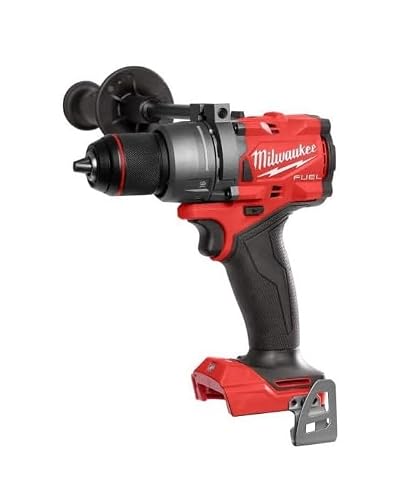
#1 Milwaukee M18FPD30 18V M18 FUEL Gen 4 Brushless 13mm Hammer Drill/Driver (Skin)
★ 4.7 (82 reviews)
A$287
Check Price →
#2 Bosch Professional GSB 18V-110 C Brushless Connect-Ready Combi Drill (Skin)
★ 4.7 (217 reviews)
A$225
Check Price →
#3 Makita DHP486Z 18V LXT Brushless Heavy Duty Combi Drill (Skin)
★ 4.4 (665 reviews)
A$269
Check Price →See Our Top 7 Drills for Australia
Hand-picked and ranked by our editors — with honest pros, cons, and Aussie pricing.
Weekly tool deals, in your inbox
We check prices on every tool we cover daily. Once a week we send the biggest genuine price drops we spot - the ones worth adding to your kit.
- One email a week, max
- No spam, ever
- Unsubscribe in one click